- Teacher: Hehl James
- Teacher: Lovette Whitley
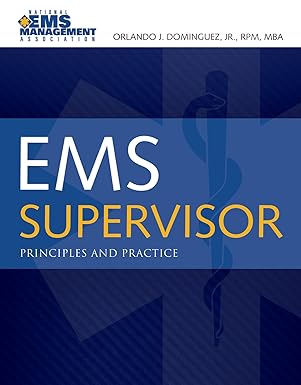
EMS Supervisor: Principles and Practice offers an introduction to creating and maintaining a successful EMS organization through chapters on managerial leadership, team building, professional communications, quality improvement, customer service, strategic planning, crisis management, and budgeting. Establishing knowledge and authority in these areas is crucial to success as an EMS officer.
EMS Supervisor: Principles and Practice meets the course outcomes for the National Fire Academy’s Fire and Emergency Services Higher Education (FESHE) Emergency Medical Services Curriculum Management of Emergency Medical Services course. Published in partnership with the National EMS Management Association.
Objectives:
- Discuss the basic philosophy, organization and operation of injury prevention and risk-reduction programs.
- Compare and contrast management and leadership.
- Provide practical examples of the principles of customer service in EMS.
- Apply the technique for conducting an effective performance appraisal.
- Identify strategies to optimize reimbursement for EMS services.
- Apply quality improvement techniques to various aspects of EMS operations.
- Define due process and apply the principles of a progressive disciplinary program.
- Define ethical behaviors and decision-making strategies when faced with an ethical dilemma.
- Teacher: Magill Angela
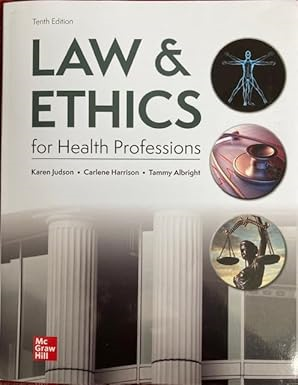
The Law & Ethics for Health Professionals course is designed to provide healthcare practitioners with a comprehensive understanding of the legal and ethical issues they may encounter in their practice. This course aims to equip participants with the knowledge and skills necessary to navigate complex legal requirements and ethical dilemmas, ensuring they provide high-quality, compliant, and ethical care.
Objectives:
· Legal Foundations: Understand the legal principles and regulations that govern healthcare practice, including patient rights, confidentiality, and professional liability.
· Ethical Principles: Explore the ethical principles that underpin healthcare practice, such as autonomy, beneficence, non-maleficence, and justice.
· Decision-Making: Develop skills in ethical decision-making and apply these skills to real-world scenarios and case studies.
· Risk Management: Learn strategies for risk management and legal compliance to protect both patients and healthcare providers.
· Professional Responsibilities: Examine the professional responsibilities and obligations of healthcare providers to their patients, colleagues, and society.
· Current Issues: Discuss contemporary legal and ethical issues in healthcare, such as end-of-life decisions, informed consent, and medical malpractice.
- Teacher: Magill Angela
- Teacher: Callahan Courtney
- Teacher: Mackie Hailey
- Teacher: Norris Johnathon
- Teacher: Callahan Courtney
- Teacher: Freeman Allston
- Teacher: Hehl James
- Teacher: Mackie Hailey
- Teacher: Pierce Melodie
- Teacher: Storms Hartley

- Teacher: Hehl James
- Teacher: Tomita Dan
- Teacher: Callahan Courtney
- Teacher: Hehl James
- Teacher: Mackie Hailey
- Teacher: Pierce Melodie
- Teacher: Callahan Courtney
- Teacher: Hehl James
- Teacher: Mackie Hailey
- Teacher: Pierce Melodie